This is a post written by guest blogger Thorny Justice.
I’m still working on researching my fourth Baraboo church. It’s taking longer for a variety of reasons, so I need more time to deliver an in-depth post. But I have not arrived empty-handed. I come bearing…wheat!
Backstory
In a recent episode of V in the Wild, Veronica and I were joined by our good friend Rachel, whose prior experiences in the Brotherhood system have provided her with valuable insight. Our discussion centered around a specific set of mysteries I’ve been working to unravel: What specific roles and responsibilities might each of Baraboo’s most historic churches hold in relationship to the city’s false tabernacle and encampment plan? If you haven’t yet listened to that podcast episode, I highly recommend you do so. It’s packed with interesting decode questions and important insights.
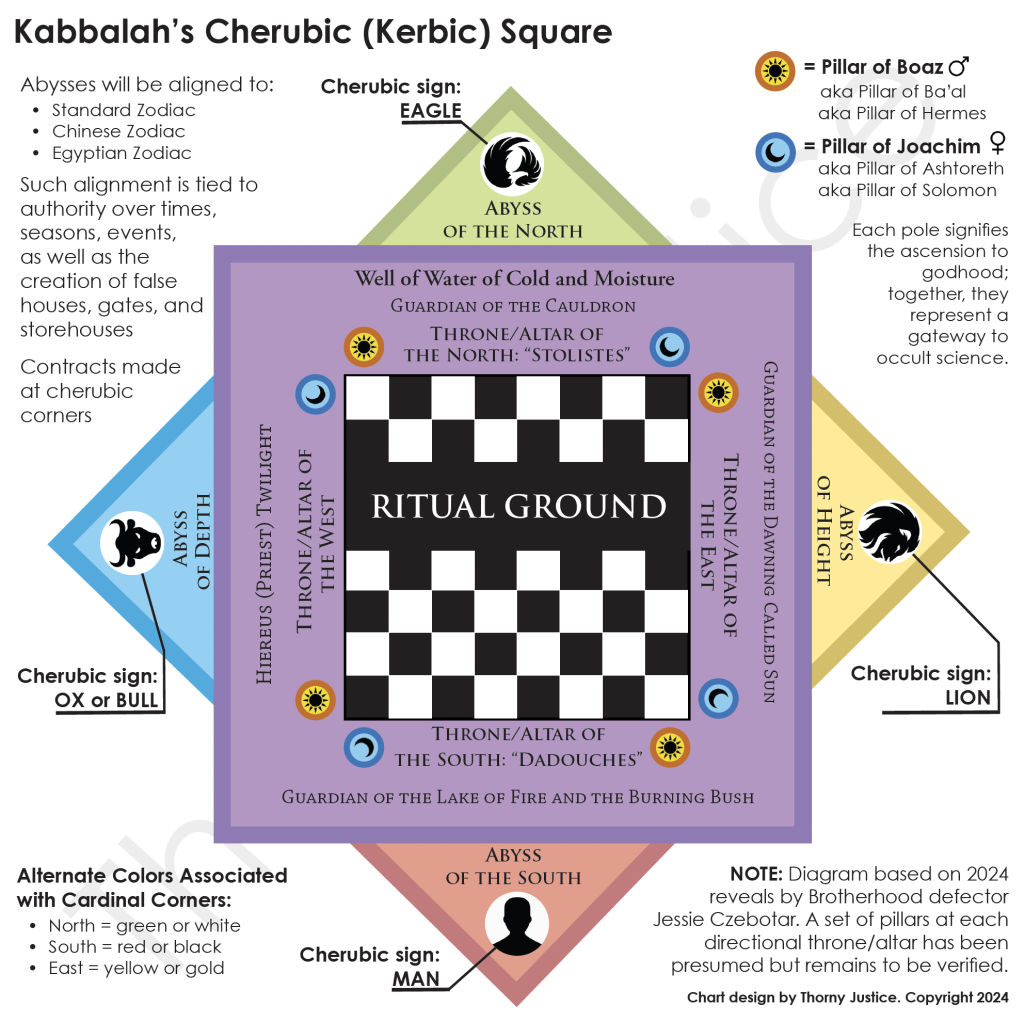
For those just coming into the ongoing analysis and decode of my Wisconsin hometown, it’s important to understand that Baraboo is the Sauk County seat. Its current courthouse building, erected in 1906, stands in the middle of a public square; and the square itself lies essentially at the heart of the city. This arrangement forms the core of a false tabernacle plan, which I’ve described extensively in two earlier posts (here and here). After I wrote the first of these two posts, another former Brotherhood insider quietly informed Veronica and I that, within such a layout, four nearby churches would hold North, South, East, and West roles around the courthouse square. However, the individual also informed us that these assigned cardinal roles would not necessarily match up geographically–meaning, it’s not as simple as looking at the churches on a map! Instead, one needs to look closely at a lot of visual and other circumstantial evidence in considering which church might best fit with which cardinal position/role.
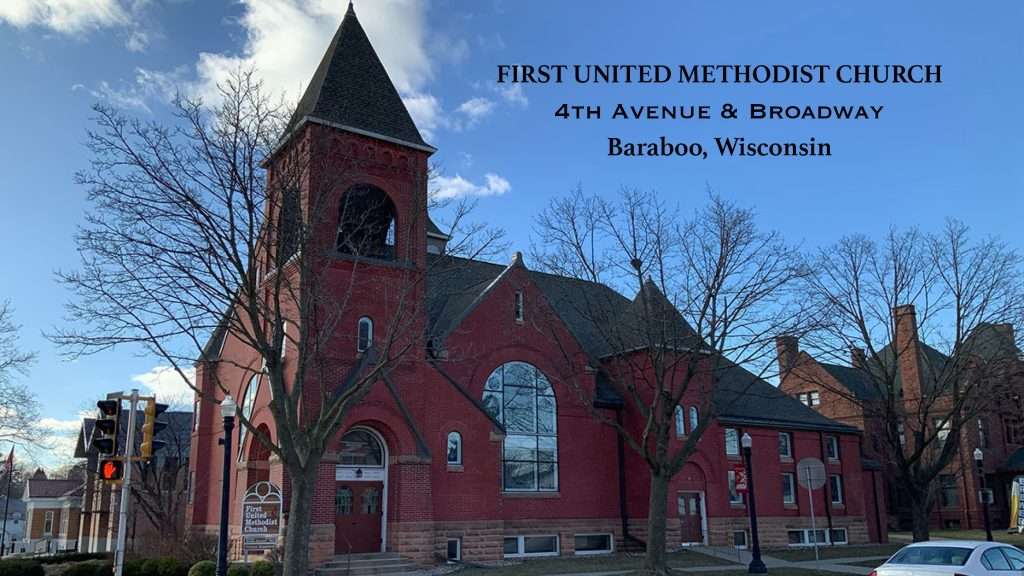
Rachel graciously offered to look at the first three Baraboo churches I’ve researched. She considered my many questions and possible interpretations, and offered answers or corrections where she could. She also provided an astounding array of additional insights I hadn’t expected, enabling me to consider some of my prior analysis from a fresh perspective. One of Rachel’s valuable insights related to windows at the first church I wrote about–First United Methodist (formerly First Methodist Episcopal). What she had to say started my mind whirling…
Three Wheat Windows
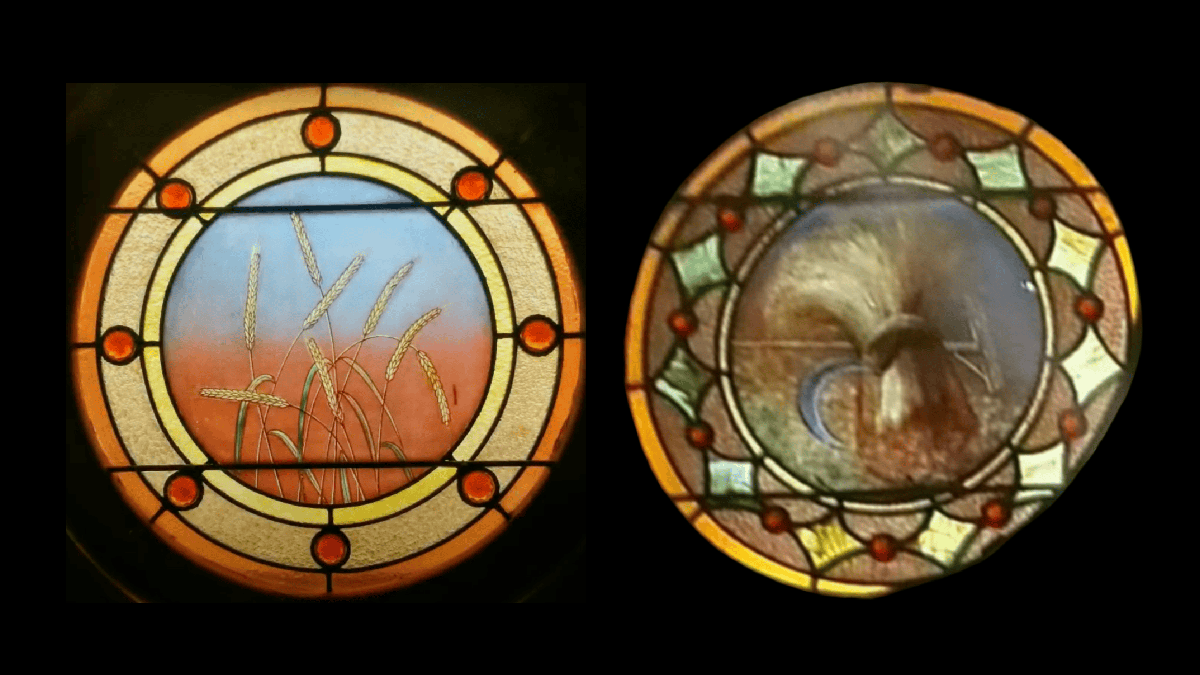
In trying to figure out which cardinal position First Methodist might hold, I offered up three pieces of stained glass from the church sanctuary, all of which portray wheat.
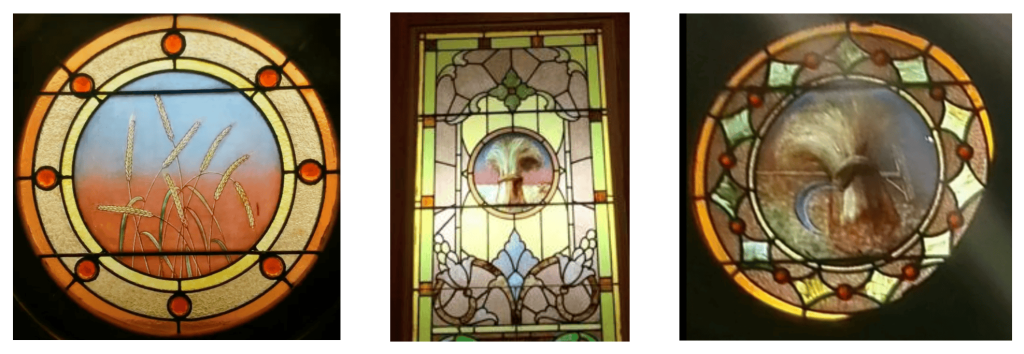
It hadn’t escaped me that wheat is a known Freemasonic symbol of recruitment. I thought it might simply indicate that First Methodist was a major recruitment hub. However, wheat has also often been symbolically associated with the Israelite tribes of Ephraim and Manasseh (the two sons of Joseph). As detailed in the book of Numbers, God instructed these two tribes to encamp on the west side of his holy tabernacle. So, I asked Rachel if the sanctuary’s heavy references to wheat might indicate that First Methodist held/holds the western position in the false tabernacle plan.
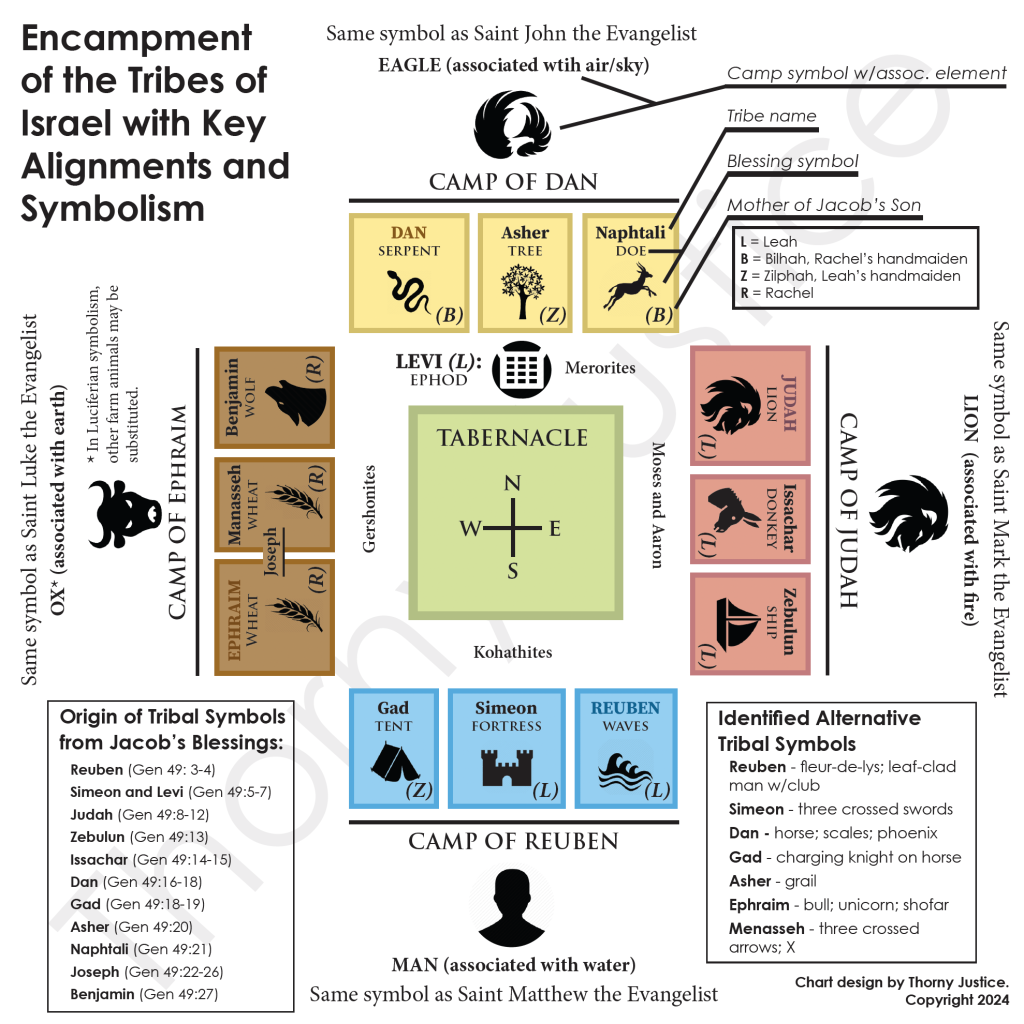
Rachel had a different thought. She immediately reminded me that the Brotherhood additionally uses wheat to symbolize currency. What’s more, she noted that all three of the wheat windows in First Methodist’s sanctuary portrayed wheat at a different stage of development. Scroll back up to the image I’ve provided. You’ll see that one window shows individual sprigs of wheat, presumably growing in a field. Another depicts a cut sheaf of wheat with harvest tools, including a scythe. The third pictures a sheaf of wheat drying in a field, presumably ready for market.
[*NOTE (April 28, 2025): Within a few days of publishing this post, researcher Cathy Fox reached out with a few thoughts and corrections. The correction involved the names of the tools of harvest depicted with the cut sheaf of wheat in the second window mentioned above. She noted that the bladed tool is not a scythe, but rather a sickle, used for cutting wheat. A scythe, she explained, is for cutting grass and hay. I’m grateful for her correction, as I wish to be as accurate as I can.
Cathy also noted that the sheaf of wheat standing in a field was not likely bound for market, but instead for a grain storehouse of some sort. That observation caused me to sit up and take notice. Brotherhood whistleblower Jessie Czebotar has revealed that false storehouses are one of several items placed under the agreements made and false authorities established in a satanic ritual chamber. Cathy even wondered if, in this case, First Methodist was communicating that it had organized such a storehouse and/or (if I understand her correctly) whether farmers’ tithes went to this church, presumably to support the Brotherhood system. She even thought it possible that, beyond organizing a grain store, First Methodist or some among its membership might control one or more local grain stores. Remember, wheat is a cover and/or surface symbol for something else–about which, more below.]
Rachel suspected that these references to the grain, or currency, in various states of development provided a strong reference to First Methodist’s role in production, buying, and selling–in a word, trafficking.
In my more extensive post about First Methodist, I was able to assemble an array of evidence for the location of a spiritual gate in the church’s sanctuary ceiling. Veronica had the presence of mind to ask if the wheat windows might also suggest that the Brotherhood has trafficked people through the gate in that location. Rachel replied that the likelihood of such activity was strong.
The Fourth Wheat Window
Well after we’d finished recording the podcast episode, my mind continued to turn and turn on what Rachel had said. And then, as I mulled, I suddenly realized that there was a fourth wheat window at First United Methodist. But it wasn’t in the sanctuary…
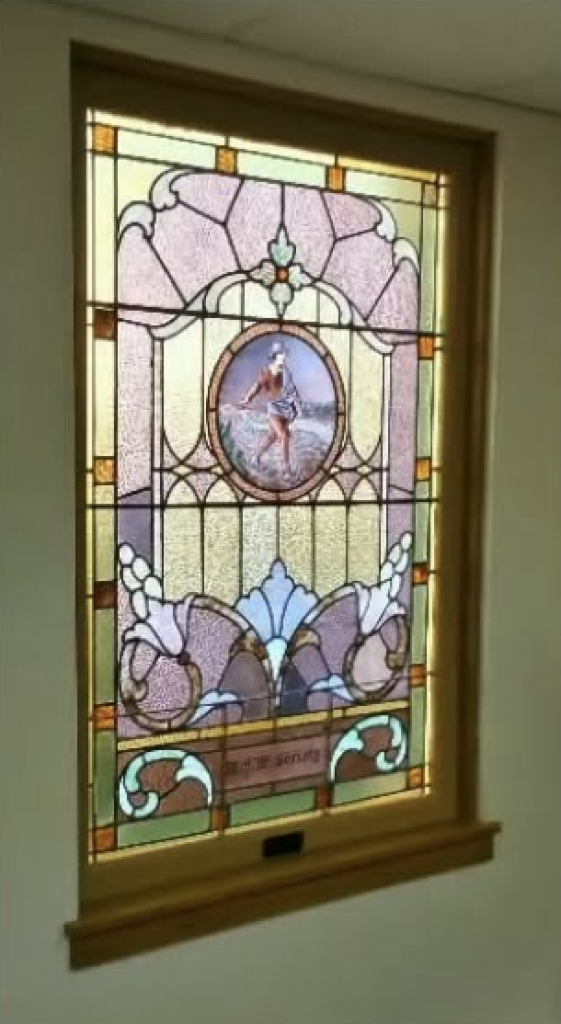
The window depicts a sower in a field. I’ll give you just one guess as to where in the church it’s located…
If you deduced that this earliest stage of wheat, otherwise known as seed, would lie in the nursery…? Congratulations, I guess. The placement makes perfect sense, but the creep factor is off the freaking charts.
I sent the sower image to Veronica, who immediately recognized its importance. A day or two later, she sent me an additional thought. She noted that Kerth Barker identified the scythe as a symbol for death. Makes sense, right? A scythe cuts things down or off. It’s why the figure we recognize as the grim reaper–death personified–is so often portrayed with a scythe. That wheat sheaf with the scythe, then, was maybe hinting at a lot more.

[**NOTE (April 28, 2025): Again, as Cathy Fox noted, the tool depicted in First Methodist’s window is a sickle, not a scythe. However, the basic symbolism likely has the same meaning, since both tools are used to cut crops; it’s just a matter of which tool is used for which crop. In the case of wheat, the short handled sickle is the preferred tool. Cathy noted that the other visible tool in the window is likely a rake, probably used for some aspect of the threshing process, in which grain is separated from both stalk and chaff.]
[***NOTE (April 30, 2025): I did some more digging on the second tool depicted in that third window. It’s not super clear from the image, but I’m pretty sure Cathy is right about it being a wooden rake. From what I can understand, it would have been used to gather up cut wheat, so that it could more easily be arranged and tied into sheaves. As depicted in the fourth window, the sheaves were then dried, prior to threshing. I was able to connect dots using an article about early farming and farming tools on a blog called Passion for the Past. You’ll have to scroll down a ways, but the post actually includes a photo of the author holding a wooden rake, while his wife beside him holds a hay fork.]
Cardinal Progression
Once I knew I had four windows and not just three, I started to contemplate whether they might peg to the cardinal directions. The nursery window faces east…the direction from which the sun rises…where things “begin.” Was there possibly a progression in the developmental stages from east to south to west to north…?
This hunch was fully confirmed, as mapped out below:
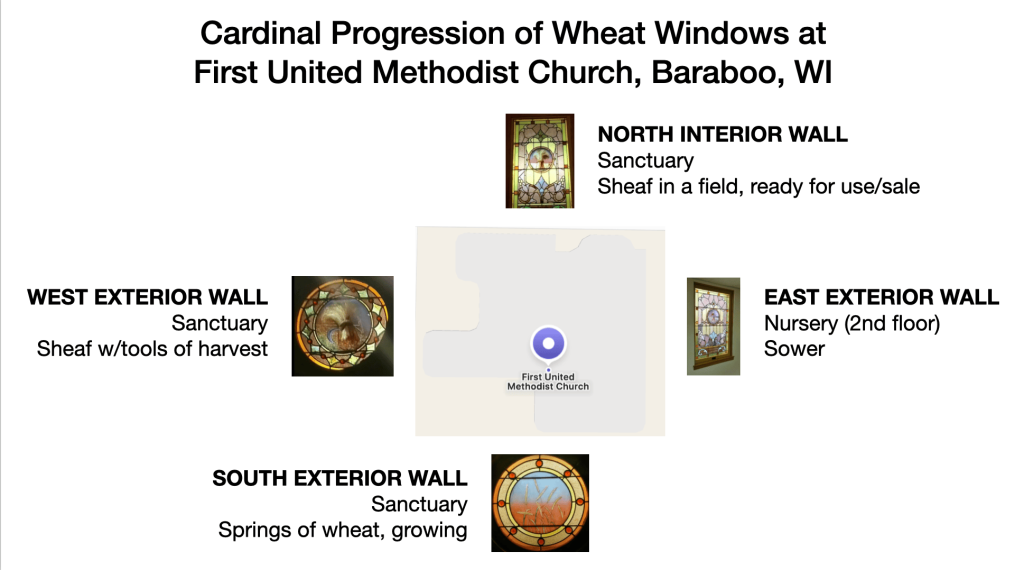
Having worked out these bits, I sent the image of the sower window to Rachel to see what she’d have to say. In relationship to the fully revealed progression, her mind went straight to the window with the sheaf of wheat and the scythe, noting, “The scythe is a symbol of death and of harvest. The wheat is a picture of one of their currencies. So the wheat (a.k.a. one of their currencies–most likely human souls) is being harvested there.” Again, Rachel says scythe, though the tool is actually a sickle; however, the meaning is almost certainly the same.
Harvested Wheat
I certainly wasn’t comforted by Rachel’s take, but it spurred me to go back one more time and look at the window that depicts the wheat with the tools of harvest. That’s when it hit me…
The image is ringed with a pattern of 11 blood red dots…and 11 green diamonds.
In pointing out the pattern to Veronica, she wondered it it might be a reference to holly leaves and berries, which she noted has significance within druidism–winter, death and rebirth, fertility and eternal life. Seems like a good possibility.
It could also be that the alternating red dot and green diamond pattern encodes more than one meaning…
In the Brotherhood system, green diamonds are another way of saying “man-made” or “lab-grown” diamonds. And while few people will discuss the truth, the lab-grown diamond industry relies heavily on human remains to produce the green diamonds. Lab-grown diamonds are big business. If you’re new to this aspect of how the Brotherhood profits from its victims, Veronica has written an extremely helpful post about the production and use of lab-grown diamonds, which are not only sold on both open and black markets, but are also frequently used in the process of attaining dimensional access via ritual sex magick. My guess? The Brotherhood has had the ability to produce its own diamonds (and rubies, and emeralds and sapphires) for a very long time. Commercializing this industry and getting the uninitiated to pay retail for such abomination is potentially a more “recent” innovation…but perhaps that, too, has been going on for longer than any of us would like to imagine.
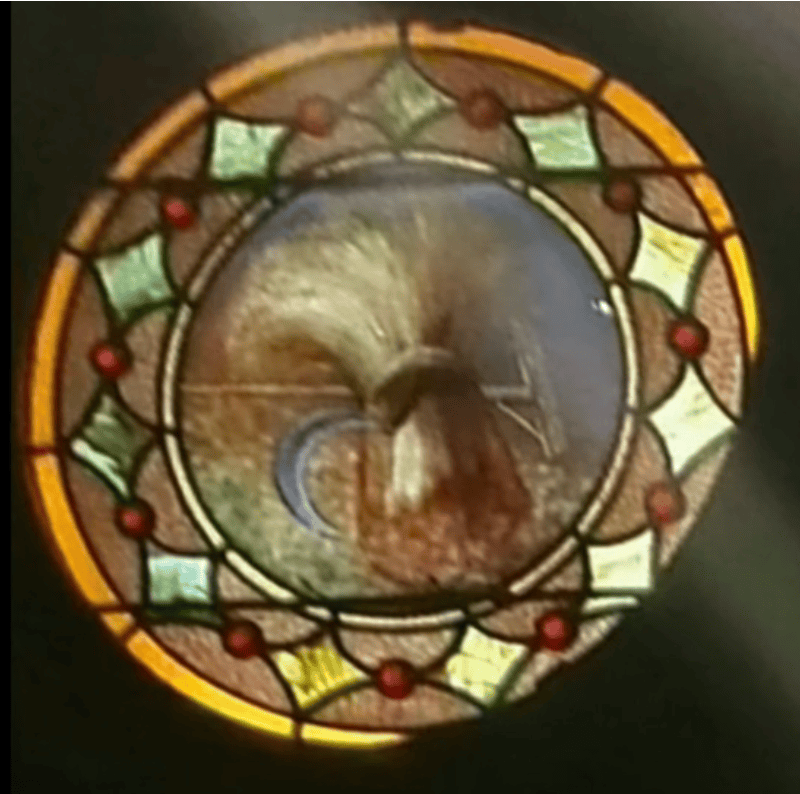
The visual references to blood and diamonds in conjunction with harvested wheat…? Consider the stark words of Brotherhood whistleblower Jessie Czebotar…
“The most pure and valuable diamond is made with a carbon of a child under eight years old.”
–Jessie Czebotar (DO 2021-09-09 Craig Sawyer: Hero or Monster?)
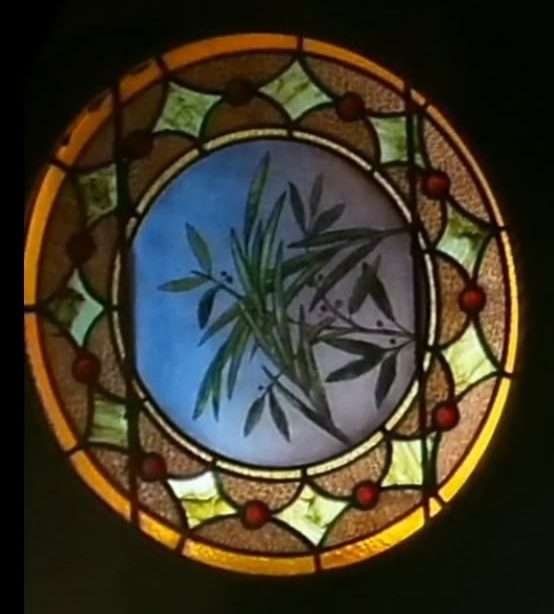
This wheat roundel is actually one of a pair in the sanctuary’s west window bay, the other depicting olive branches, ringed with the same red dot and green diamond pattern. I have a lot more research to do on the symbolism of the olive branch; so, for now, I won’t do much more than point to its presence here. However, I will say that I’m already hitting on some sources that identify the olive branch as having meaning in occult/alchemical traditions.
Eleven drops of blood? Eleven diamonds? Well, let’s just say that the number eleven has deep esoteric significance and is often associated with sacrifice. It’s not by accident, for example, that the Twin Towers–giant Ba’al and Ashtoreth poles that also visually mimicked the number eleven–were destroyed on the 11th of September 2001. It frankly becomes quite difficult to ignore that 9/11 was a mass sacrificial event, carried out not by a ragtag group of Middle Eastern terrorists, but rather by elite Luciferians.
And which wall of First Methodist is it, again, that holds the image of the wheat with the tools of harvest, including a scythe…? It’s the west wall. In an underground ritual chamber, it’s the west wall where the sacrificial altar is typically placed. West and sacrifice are closely linked in the occult Brotherhood system.
Adding all of these considerations together, it sure seems like Rachel might be right on target in asserting that First Methodist has operated as a location for soul harvesting…operations that may well be ongoing.
One Final Window
In assembling this post, I ran across one additional tidbit that I believe is significant, regarding First Methodist. In his book, Cannibalism, Blood Drinking & High-Adept Satanism (2019), Kerth Barker discusses a series of films shared with him in the 1970s by a man he calls Bob. Bob had been hired by high-level insiders to document secretive, satanic cannibalistic and blood-drinking rituals. The films had been intended only for the insiders themselves, not to share, but Bob had made multiple copies and shown them to others of his choosing, including Barker.
TRIGGER WARNING: While I won’t go into detail concerning what Bob filmed, the next paragraph does contain information that may be disturbing for SRA survivors and others. If you have reason to believe you may be triggered, just skip down.
In two of the rituals Bob filmed, children just a few months old were beheaded, then cooked to serve at very cruel dinner parties, to which one or more unsuspecting guests were invited. After the meal had been eaten, the heads were brought out on platters in order to clue those unsuspecting guests in on what they had just ingested. Bob noted that another of the rituals he’d filmed had taken place around Easter time, at an undisclosed private estate, to which he was transported in a windowless van–to ensure he and other attendees could not know or reveal the location. Upon exiting the van, Bob was ushered through a garage, into a home, and, ultimately, down a hallway that led to a temple room. There, he filmed the sacrifice of a ten or eleven-year-old girl, whose blood was subsequently mixed with wine and drunk by the attendees. Notably, the hallway leading to the temple room had been decorated with “some classical paintings depicting baby angels with wings.” Later Bob told Barker that the paintings of the baby angels in the hallway had been “placed there as a sarcastic joke of some kind,” indicating that babies, too, were sacrificed in the temple room.
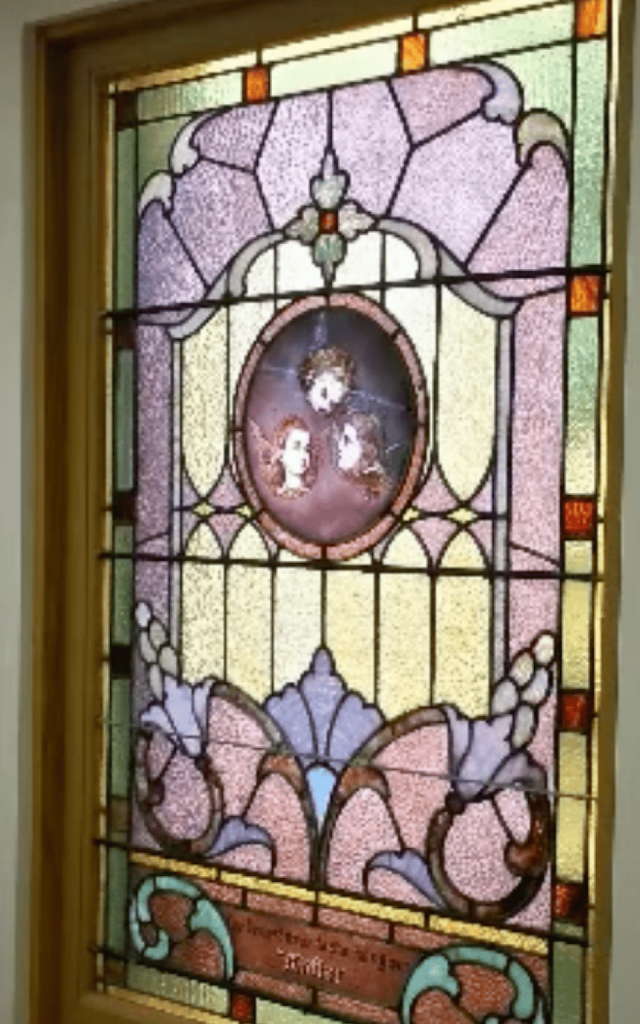
With this information in mind, consider one additional window from Baraboo’s First Methodist Church. It depicts the disembodied, winged heads of three child “angels.” Like the sower in the second-floor nursery, this “angel” window has been placed in what I consider an equally troubling spot: the east wall of the second-floor ladies’ restroom, a space dedicated to the disposal of what has already been consumed and rendered worthless: human waste. It seems a lot like the kind of awful joke Bob referenced at that elite estate.
Yeah, I’m pretty confident that First Methodist is a very bad place. In fact, I’m confident it’s been a very bad place from at least the time of the current building’s completion in 1898. And if pressed…? I’d go so far as to guess it was a bad place from the congregation’s establishment in the 1840s.