This is a post by guest blogger Thorny Justice.
If you’ve been following this series, you already know that I’ve been looking closely at six historic churches in my hometown of Baraboo, WI–all of which I have reason to believe play roles in the Luciferian Brotherhood system. So far, I’ve performed close analysis on the first three.
For this fourth church, I thought I’d try something a little different. Now’s your chance to test your chops and do a practice Baraboo decode. I’m going to provide you with a series of prompts that should help you to think more deeply about different aspects of the church in question. Some things will be easy to figure out, some moderately challenging, and some more difficult or time consuming. It’s up to you how deep you want to go, but what I’m giving you should be great practice.
** DON’T FEEL LIKE YOU HAVE TO DO IT ALL! ** I’ve provided a lot, and it may seem overwhelming. Start by just skimming through and picking a few questions that interest you or that you already know the answers to. If what you come up with leads you to keep going…by all means, keep going!
To be clear, despite the fact that I’ve provided a sizable chunk of data for you on this particular church, what’s here is far from exhaustive. You can certainly find plenty more on your own. Call the material I’ve provided below a good start.
In my own research and analysis, I use a wide array of resources to gather relevant information, including but not limited to:
- Veronica’s blog posts and transcript archives (you get tons of of additional resources with a tiny subscription fee!)
- Church websites
- Church YouTube channels
- Google Maps
- Sanborn Fire Insurance Maps
- State and local historical society websites and collections
- Old books digitized on Archive.org (e.g., local histories, esoteric writings, etc)
- Newspaper archives
- Search engine queries
Decoding is like working a puzzle…without having a full picture on the box top. So, feel free to use any or all of the above resources and more in your analysis; whatever helps you figure out the puzzle. Use the images and prompt questions provided as a springboard, but get creative. Follow your hunches. If something isn’t obvious, but it raises your eyebrow…KEEP DIGGING! Also, you may need to take a rest from some things. Never be afraid to just mull for a while. I do a lot of mulling. Observation and thoughtful, careful analysis is the goal. Don’t force things, but don’t dismiss stuff, either. Sometimes things that seem insignificant actually mean a great deal.

Just like me: you won’t always be right, you won’t always be wrong; but if you try, you’re almost certain to fit a number of compelling pieces of the puzzle together. I highly recommend jotting down notes to keep track of what you see, questions that arise, ideas that develop, and thoughts about which elements might fit together to give you a fuller sense of this church’s potential occult side.
Now…I already have answers to some of the question prompts I’ve laid out below.
HOWEVER…
In other instances, I actually don’t yet have answers–either because I haven’t yet pursued that part of my analysis, or I’m not quite certain what the available evidence indicates. ** So…there’s a real chance for you to make important, original discoveries and further a growing understanding of Baraboo’s hidden side! **
Want some recognition for your decode work…? I’d love to give you some!
Along with our good friend Rachel, Veronica and I recently recorded a “V in the Wild” podcast discussion of the first three churches I’ve investigated. We plan to do a second installment once I’m through the last three churches. I’m very keen to include reader observations and deductions in that second discussion. So, make sure to post your thoughts, findings, and conclusions about this church in the comments below—or share them on X and tag me there: @thornyjustice.
NOTE: This post will be free and available to everyone, Consequently, for safety reasons, I won’t type out the name of the church. Better if you don’t either. However, the church name is clearly visible in a number of the images.
Ready…Set…GO!
A German Congregation Founded in 1873
This Baraboo church started out as a German-speaking congregation, about 30 years after town settlement began in earnest. It has actually had two different locations and three buildings over time. The first location was a block south and about a half block east from where the present church stands.
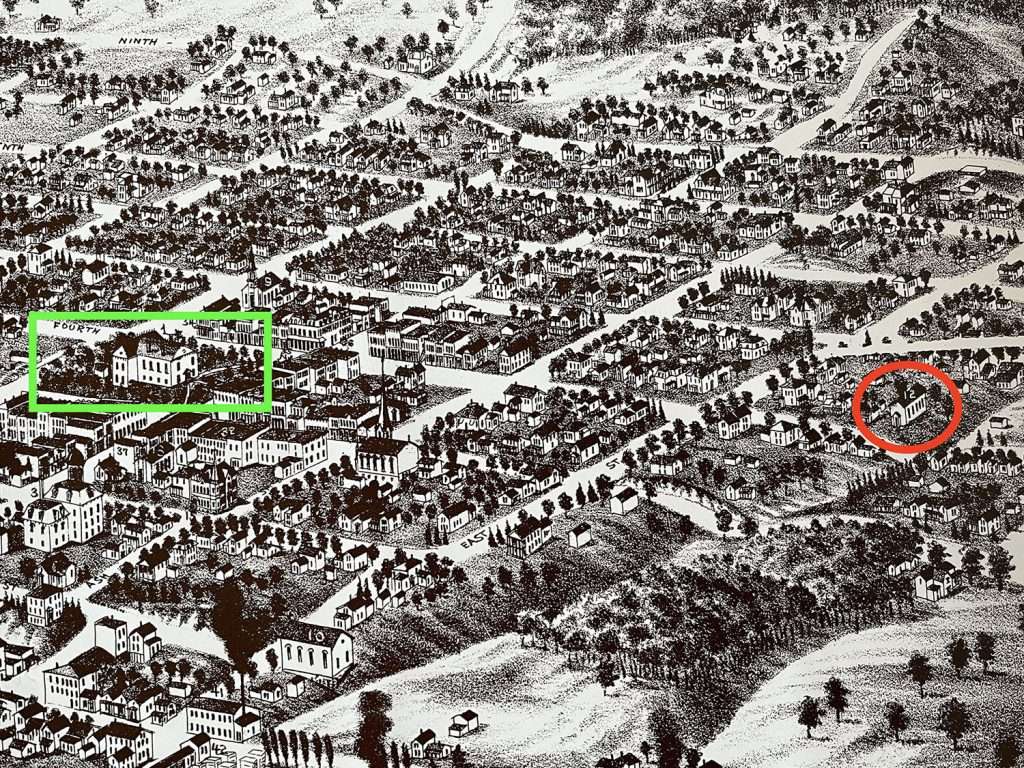
The second and third buildings have both stood on the same spot.
Let’s get our bearings by starting out with the church’s past and present geographic location, as well as its spatial relationship to some other important nodes in Baraboo…
Spatial Positioning
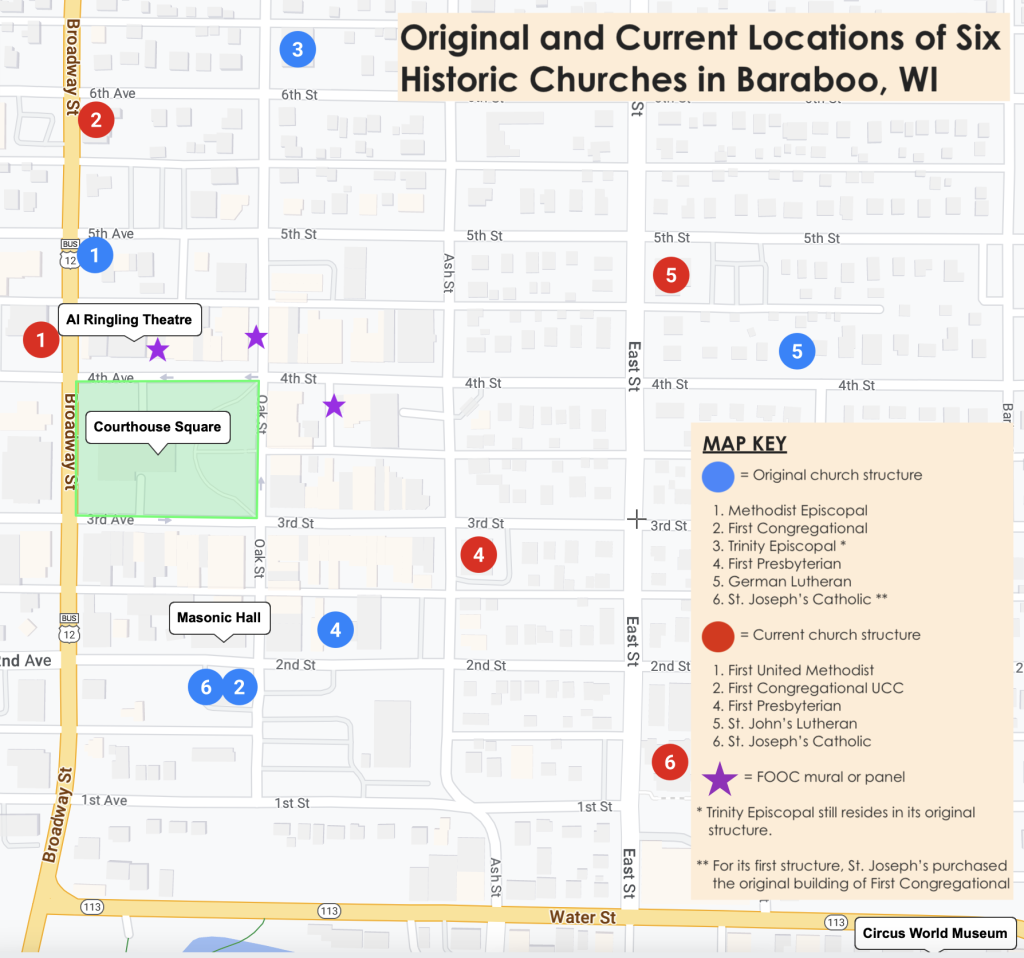
I’ve written previously about the fact that the Courthouse Square in Baraboo is actually a Kabbalah square and that the courthouse itself functions as a false tabernacle (for those with a subscription to Veronica’s blog, see here and here). I’ve also discussed this fact extensively in a recent podcast episode.
1. What proximity has this church had to the Courthouse Square over time, and why does proximity potentially matter? (If you’re not familiar with Kabbalah squares, listening to the podcast episode will help a lot. There may be other considerations, as well.)
2. What proximity has this church had to other Baraboo churches over time, and what might that proximity tell us? (The map above will provide some basic information, but if you want a more granular understanding, with some legwork, it’s very possible to map spatial arrangements over time.)
3. What do these spatial relationships potentially suggest about what lies either above or below ground?
1975 Building: Plan
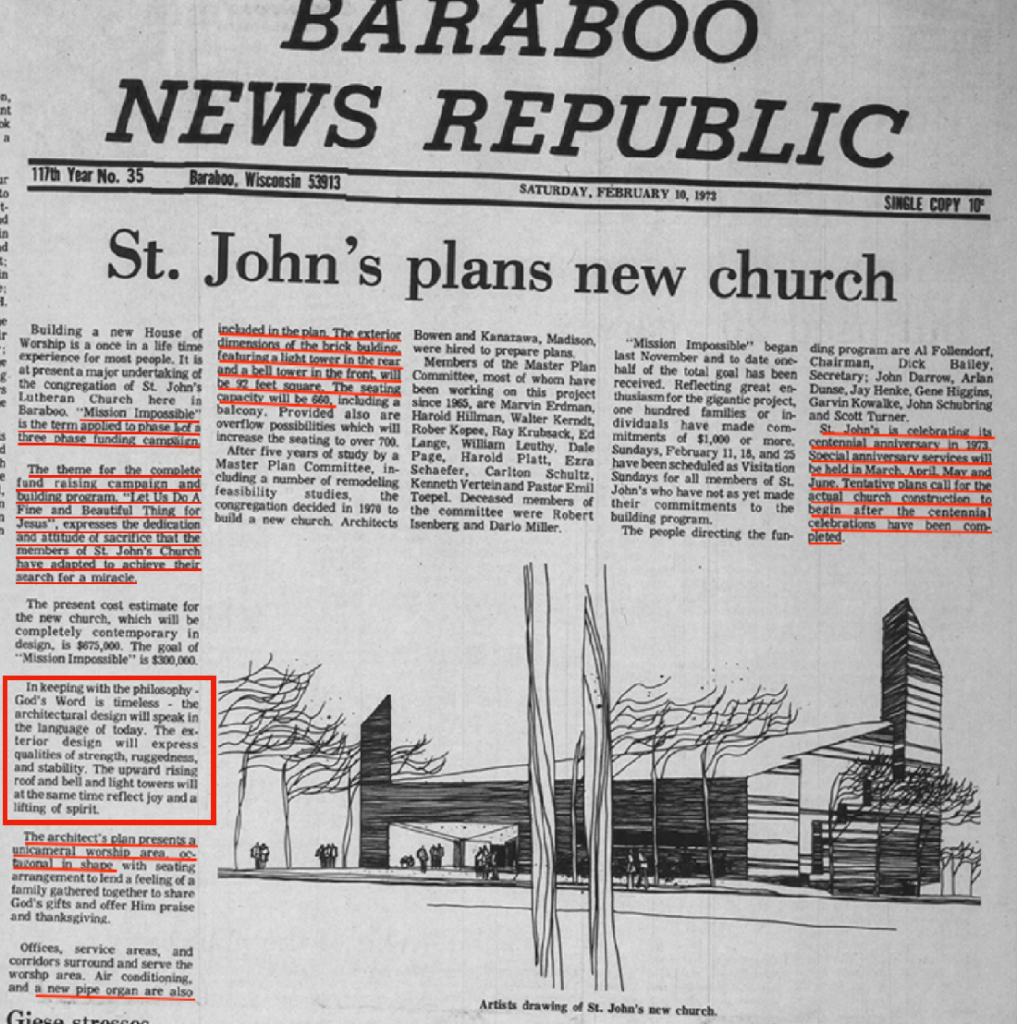
Here’s a fascinating newspaper article from 1973, about the soon-to-be modern church structure this congregation had already began to envision by 1970. It includes an artist’s rendering of the planned building.
Prompt Questions
4. Is it usual for a planned church building to garner the above-the-fold headline of a newspaper? Was it just a slow news day in Baraboo, or might other reasons have existed to feature this topic prominently?
5. Do the stated intentions for the building’s exterior architecture match your experience, as you view photos of the current building?
6. The article indicates a square footprint for the building: exterior walls measuring 92 ft x 92 ft. Meanwhile, the interior was planned as an octagon. Do these shapes signify anything, whether separately or in conjunction with one another? If so, what?
7. The planned sanctuary is described as a “unicameral worship area.” How is the word “unicameral” usually applied in English, and why is it unusual to see it applied to a worship space? Does this use of vocabulary possibly hint at anything interesting, regarding this church? If so, what?
8. The church design incorporates a bell tower at the NW corner of the building and a light tower at the SE corner, intended to light the interior above and behind the altar. What use or symbolic value might either or both of these towers hold?
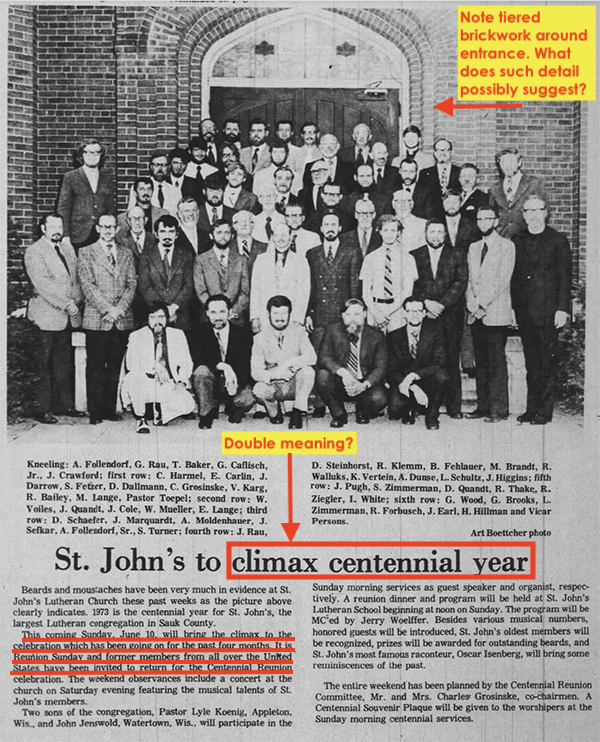
9. Is there anything potentially significant about the four-month period of centennial celebrations mentioned at the end of the news article? If so, what? [If nothing occurs immediately, a big hint can be found in a news article with an accompanying photo that I’ve provided further down, in the section on the exterior of the previous 1915 building.]
1975 Building: Exterior
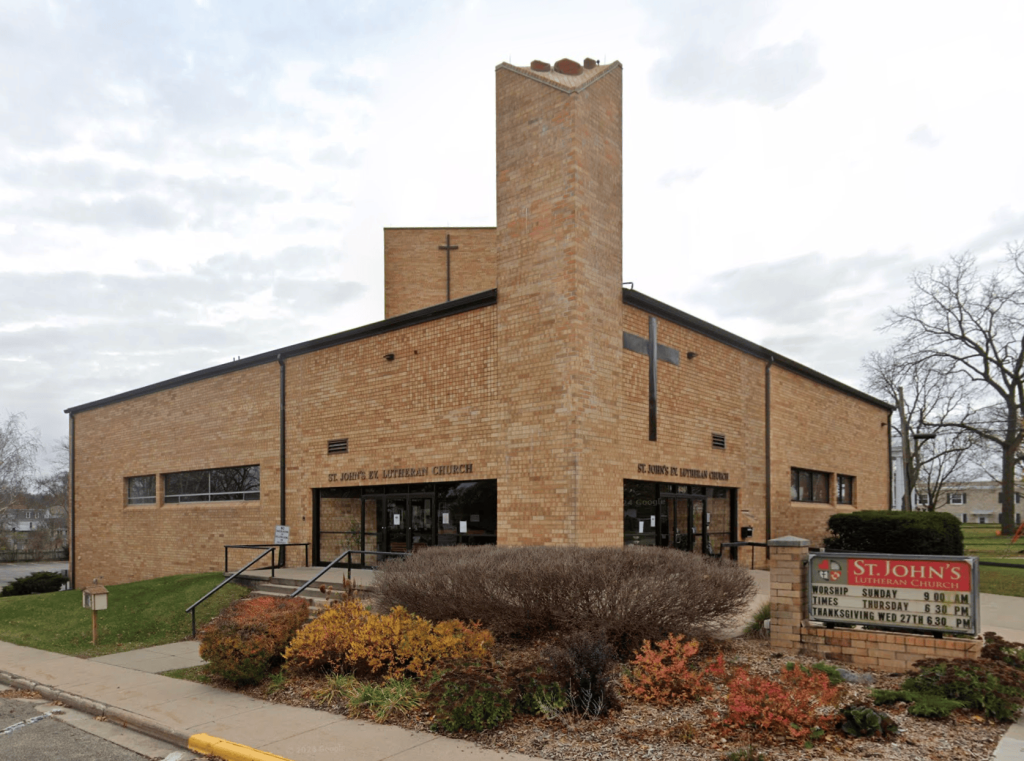
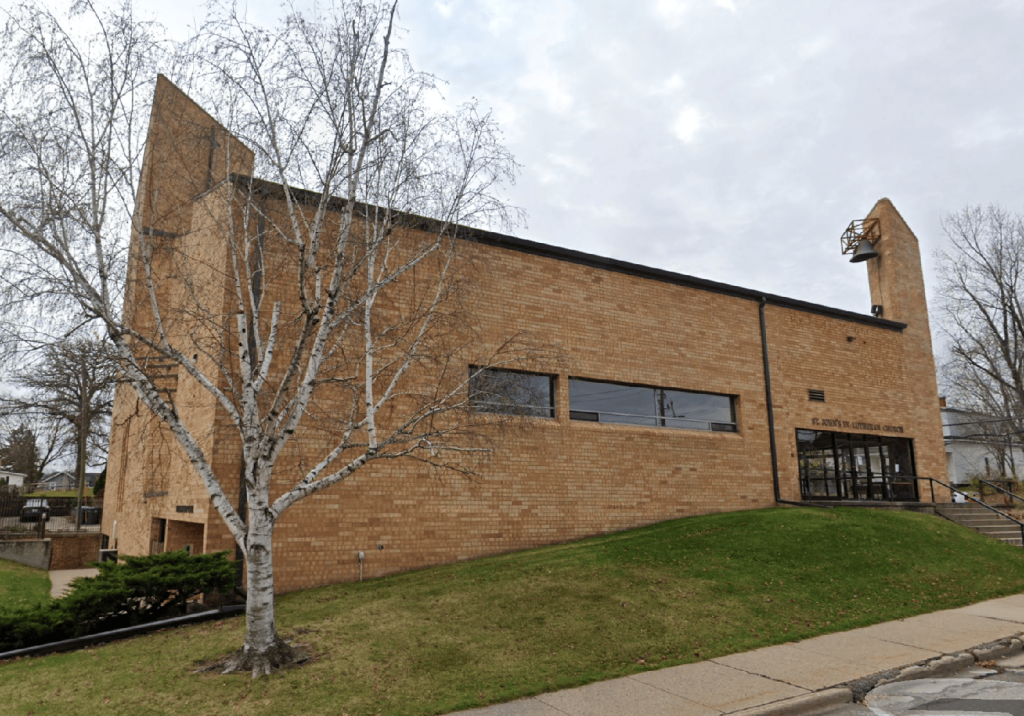
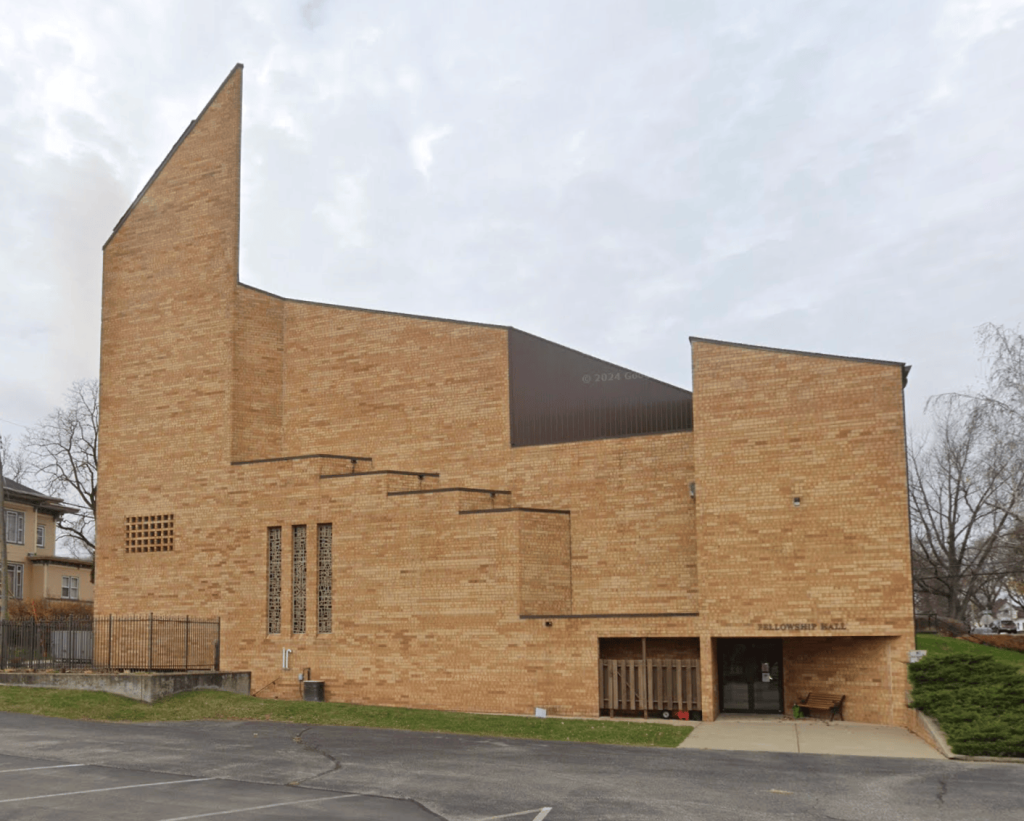
On to the completed current structure, dedicated in 1975.
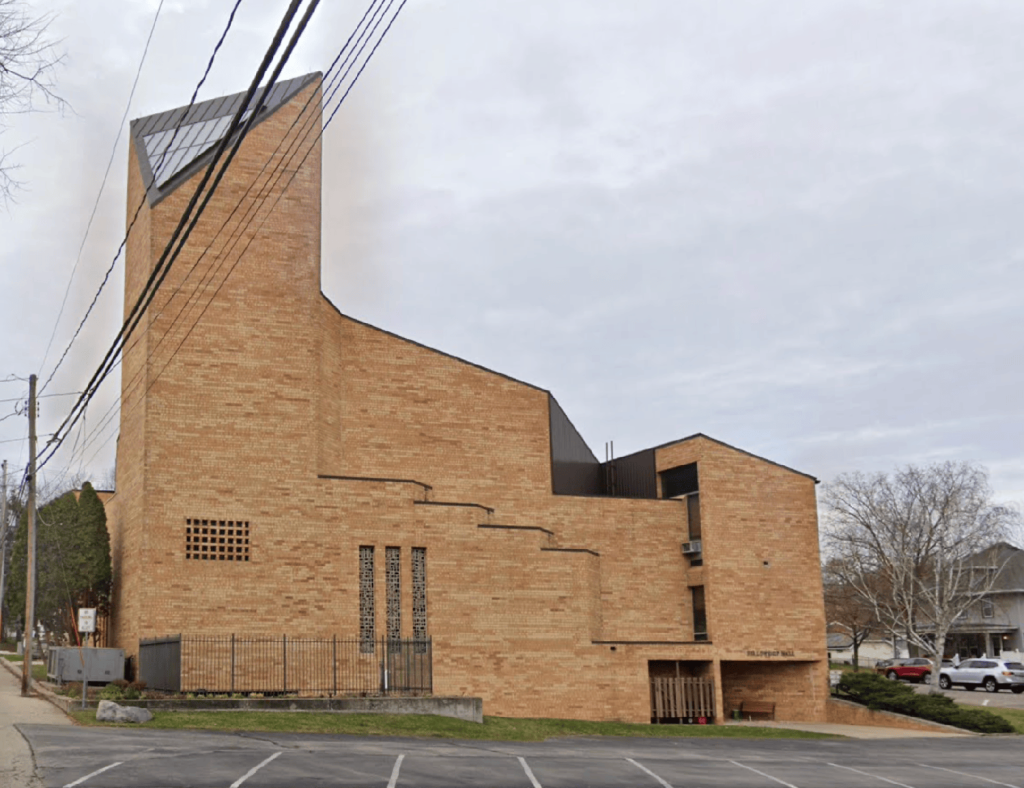
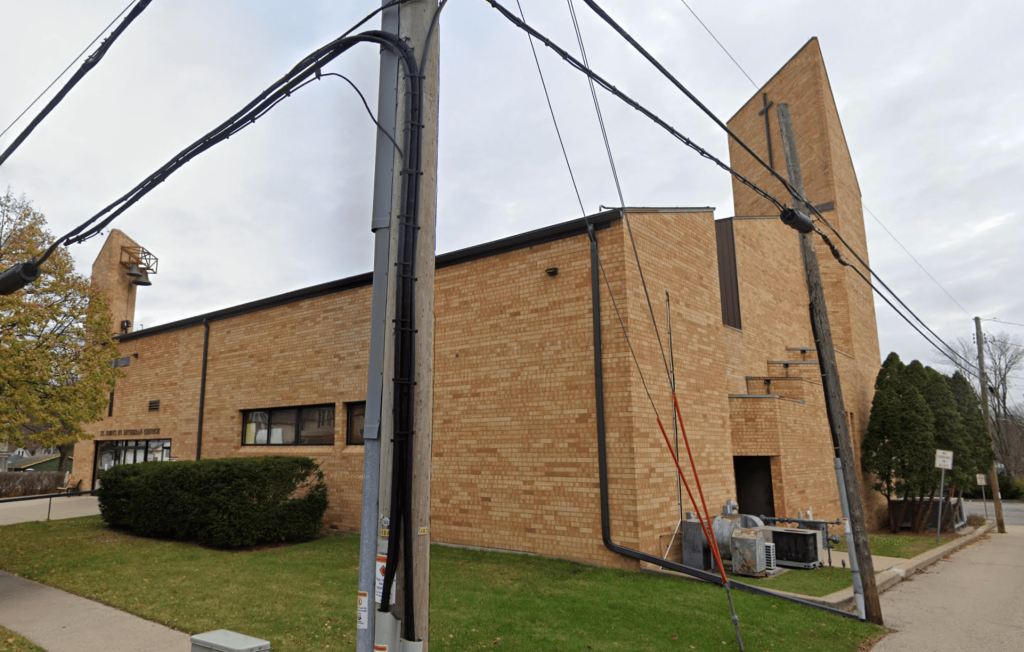
Below is a series of screenshots from Google Maps, allowing you to observe the building from several valuable angles. Look closely! Some design elements will be obvious and easy to spot, while some things are much more subtle
Prompt Questions
10. What aspects of the exterior architecture stand out to you? Why? What significance might each of these features have?
11. Did you notice any details in the brick or tile work that seemed noteworthy or unusual to you?
12. In the Luciferian system, triangles indicate a church’s contractual alignment. Triangles that point upward signify “holy” contracts, while downward-pointing triangles signify “unholy” contracts.* Does anything about this building’s exterior architecture signal the church’s alignment to holy or unholy contracts? What evidence supports your conclusion?
* Per Brotherhood whistleblower Jessie Czebotar, contract types–holy versus unholy–have to do with the names used by the spiritual entities with/under whom the contracts were forged. The same entities will frequently go by different names (e.g., Isis = Ashtoreth, but a contract will be deemed holy under one of these names and unholy under the other). Obviously, none of these contracts is actually good. Rather, the holy or unholy designation largely functions as a type of Luciferian filing/categorization method, indicating how an organizational entity, such as a church or a government agency, is subsidized within the Brotherhood system.
1975 Building: Interior
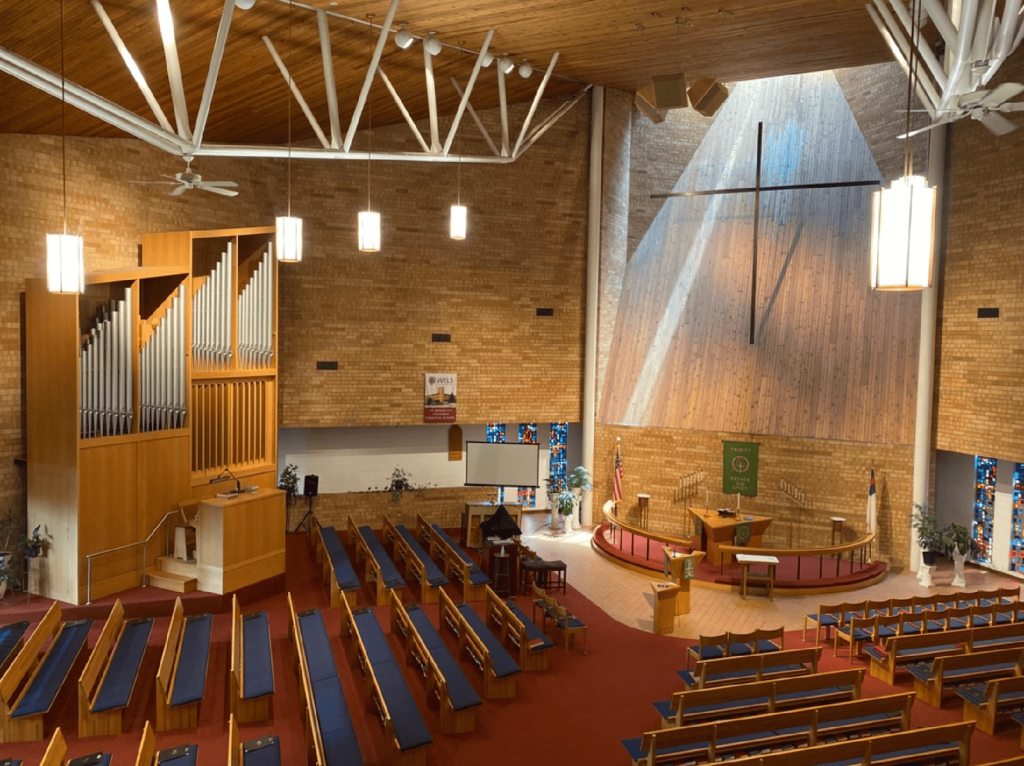
Below, I’ve provided a few screenshots from church videos, showing the current building’s interior.
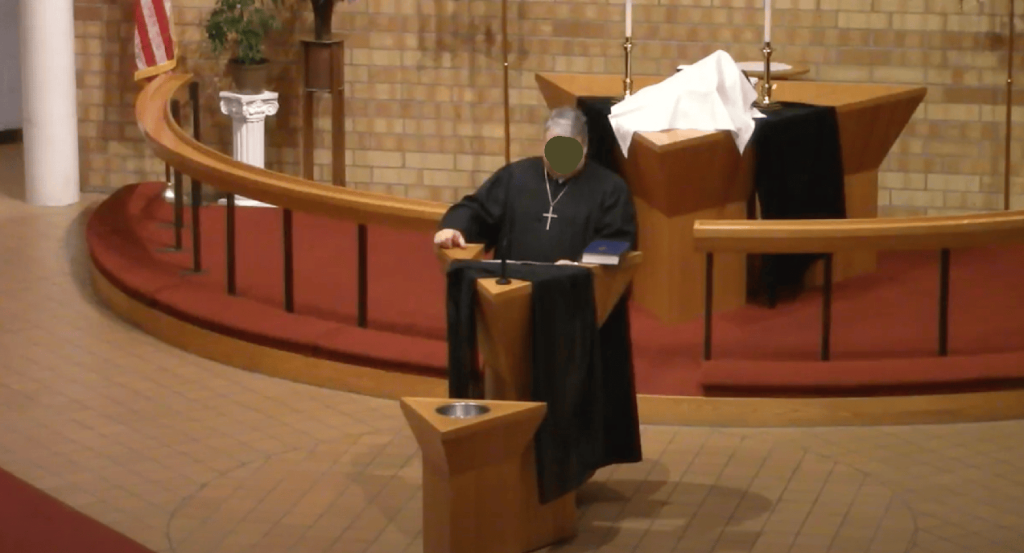
It’s a little blurry, but this screenshot allows you to see certain aspects of the altar area more easily:
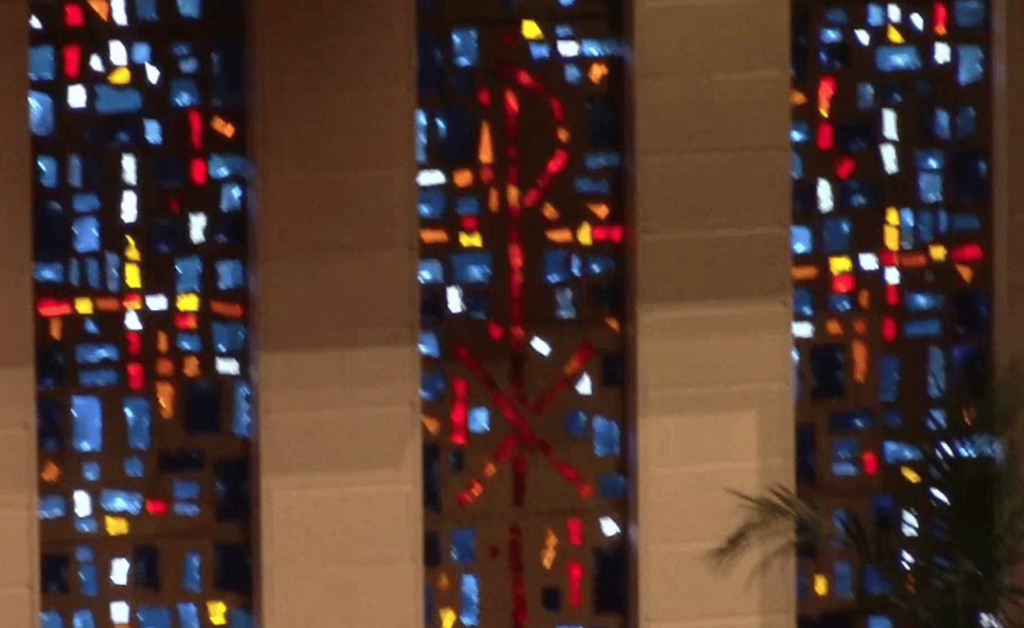
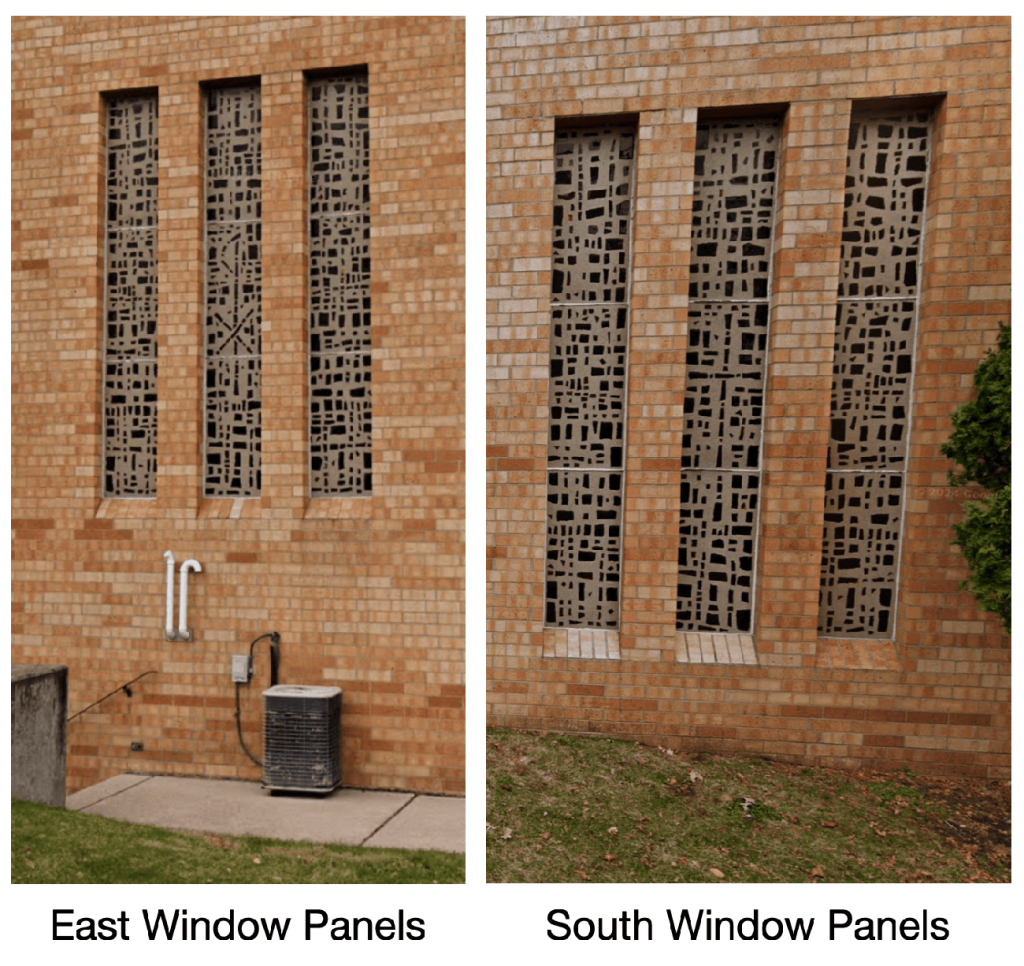
It’s hard to find really clear full shots of the stained glass from the interior, but there are three high, narrow windows on each side of the altar. The middle one on each side incorporates a symbol. Below is a not so great photo of the windows in the east wall, just so you can see the colors a little more closely. I’ve also provided views of the windows from the exterior, because they actually allow you to see the symbols in those middle windows quite clearly.
Prompt Questions
13. What structural aspects of the interior stand out most prominently to you? What significance do these features potentially hold?
14. What do you notice about the altar, podium, and baptismal font? Does their orientation or placement possibly have any relevance?
15. Does the interior hold any further clues concerning what sorts of contracts this church is under (holy versus unholy)?
16. Do you notice anything interesting in the flooring?
17. What about the stained glass in this church? (e.g., colors, symbols, placement) Are there any relevant symbols? Does the placement potentially matter?
18. Do you see any indications of which of the two light spectrums any Luciferians operating out of this church would likely leverage? (If you’re new to the concept of light spectrums in ritual magick, whistleblower Jessie Czebotar has explained them in several videos, including this one. Start around time mark 38:47.)
19. Does anything in this church suggest that it houses a spiritual gate? If so, what evidence would you use to support your answer?
20. Do you see any potential evidence of line contracts in the sanctuary? If so, where and what?
1915 Building: Exterior
This congregation had an earlier building at the same location, demolished to make way for the current structure. The cornerstone of the prior building was laid in 1914, with completion and dedication in 1915.
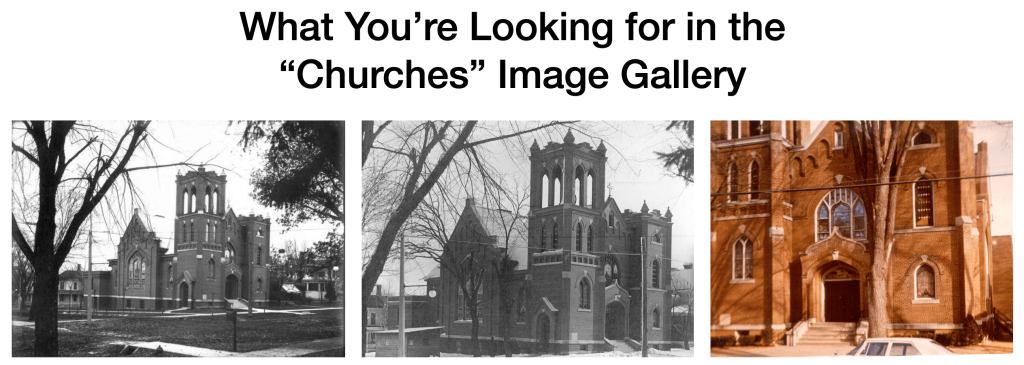
There aren’t many publicly accessible images of the 1915 building. However, three exterior views, including one in color, can be found on the Sauk County Historical Society (SCHS) website–two of which, in particular, provide excellent detail. I can’t technically post those images here, without obtaining permission; not a tenable proposition. However, you can find the images in this “Churches” image gallery. It’s a tiny bit of a cheat, but I’ve provided you with very small versions of the three images, below, so you know what you’re looking for. You’ll have to scroll a ways, because the images do not tie to distinct URLs. The images are largely organized alphabetically by church name. However, two of the images are slightly out of order and just a little past where they should be. I promise that the additional detail you’ll get makes it worth your trouble to find them.
A 1973 newspaper image I located also provides a closer view of the construction of the main entrance. The photo dates from shortly before this building’s demolition, which made way for the current church structure.
Prompt Questions
21. Can you identify the basic architectural style of the 1915 building? Is the architectural style relevant in any way?
22. What do you notice about the construction of the building? Does it have a steeple/spire? Bell tower? Buttresses? Basement? Multiple Entrances? Other interesting or curious features? What do each of these design choices potentially signal or imply?
23. Do you see anything interesting in the church’s decoration? Any brickwork features or patterns? Visible crosses (what style)? Pinnacles? Detailing around the main entrance? Keystones above the doors and windows? What potential significance might each of these decorative elements have?
24. What about the windows? Stained glass is meant to be viewed from inside a church, making it difficult to read details from exterior photos. Give it a try, though. Can you discern any motifs in the glass or guess at the theme of the large, figural window panel above the front entrance? Does the shape of the windows potentially have any significance?
25. Think back to the section on the planned 1975 building and the question about the four months of centennial celebrations that would precede the construction of the 1975 church building. Does the word “climax” in the June 8, 1973, news article potentially signal anything important?
1915 Building: Interior and Other Items
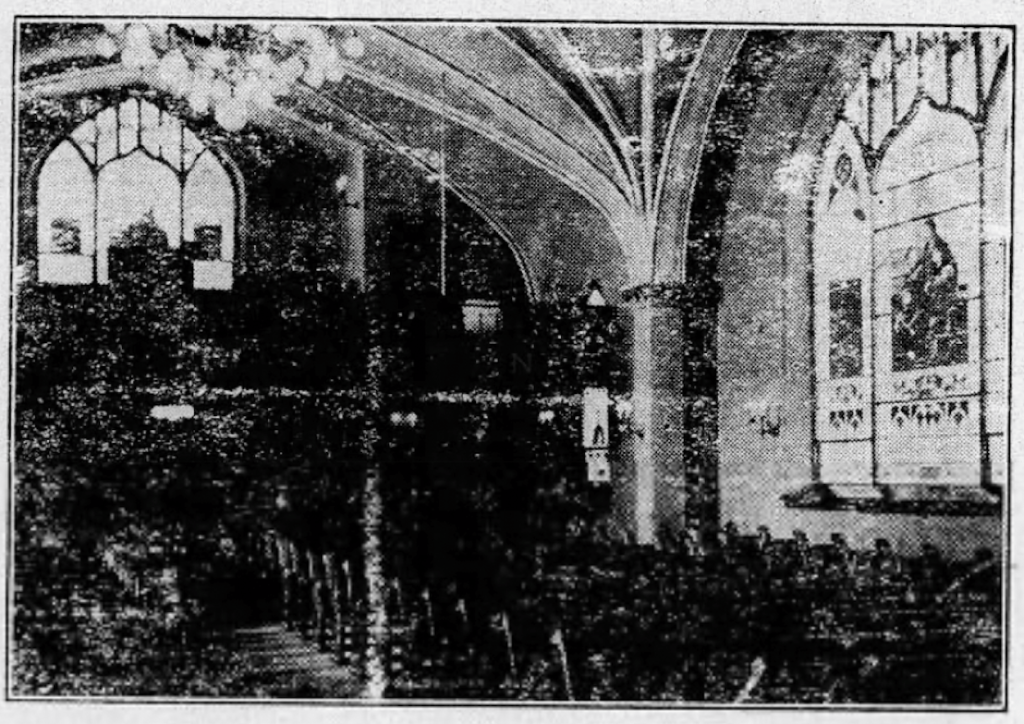
So far, I can find find only one grainy image of the second building’s interior, from a 1923 news article about the congregation’s 50th anniversary. However, it’s enough to garner a few important details.
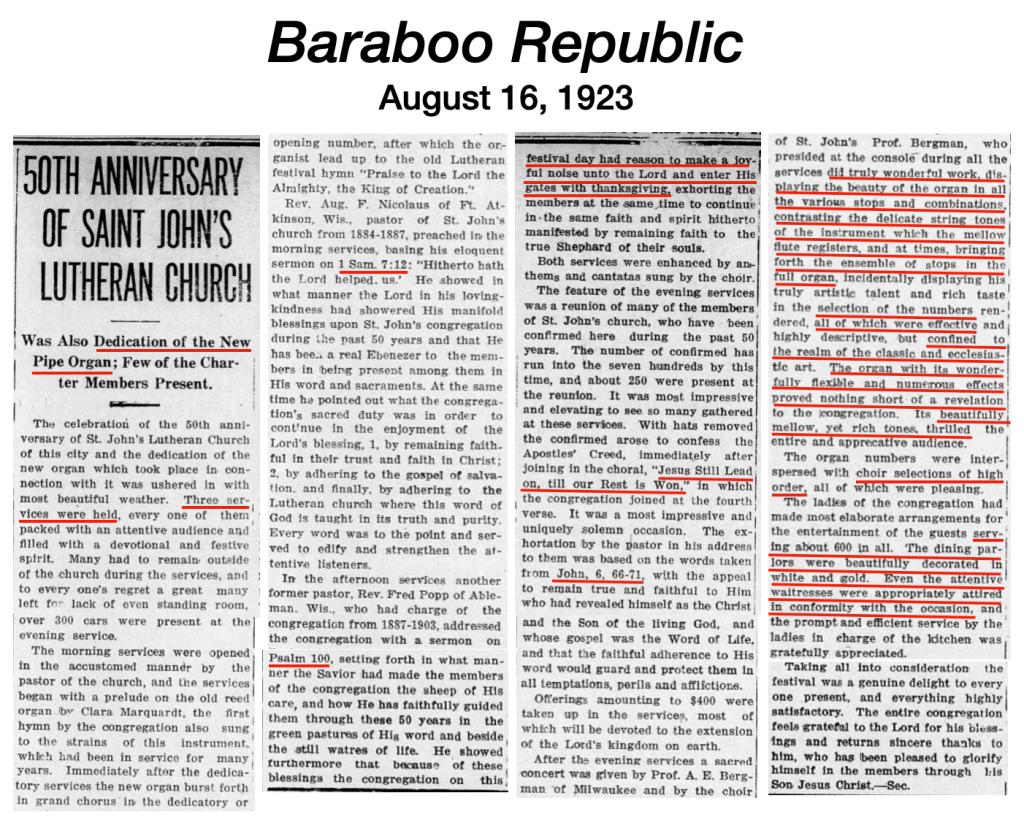
Here’s the article that goes along with the photo:
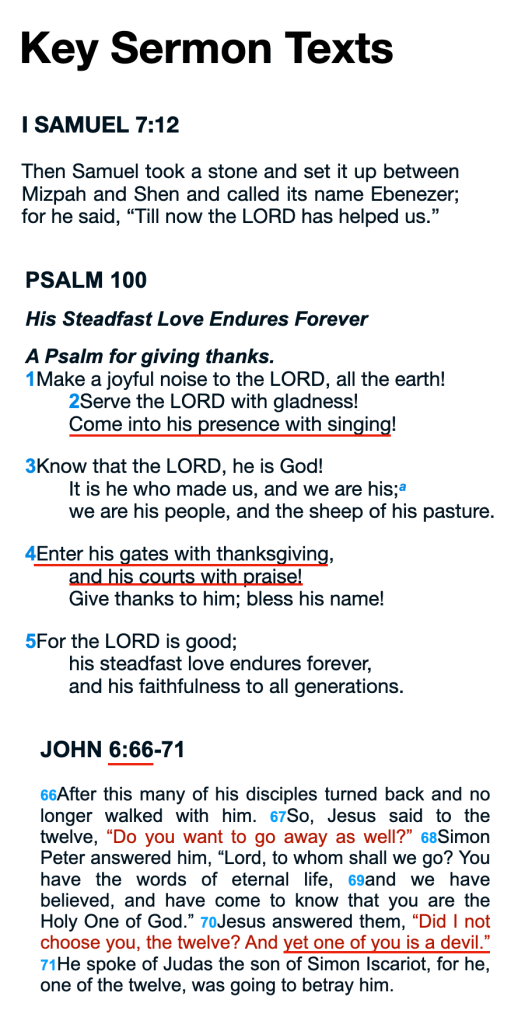
In case you’re curious about some of the Bible passages leveraged as key texts in the centennial celebration sermons…
It’s also worth your time to look up the hymns cited. I was particularly struck by the rather depressing lyrics of “Jesus Still Lead on, Till Our Rest Is Won.” Guess who wrote it…? Someone from a noble family. Why might that information matter…?
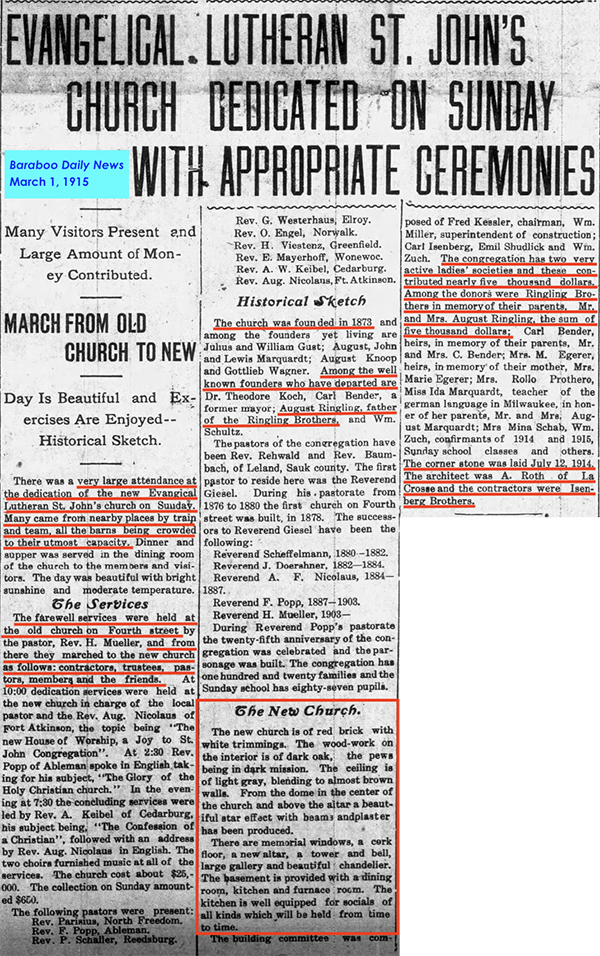
A couple of newspaper articles from 1915, around the time of the building’s dedication, also contain valuable tidbits, regarding the church’s interior decor, furnishings, and more. Here’s the first article:
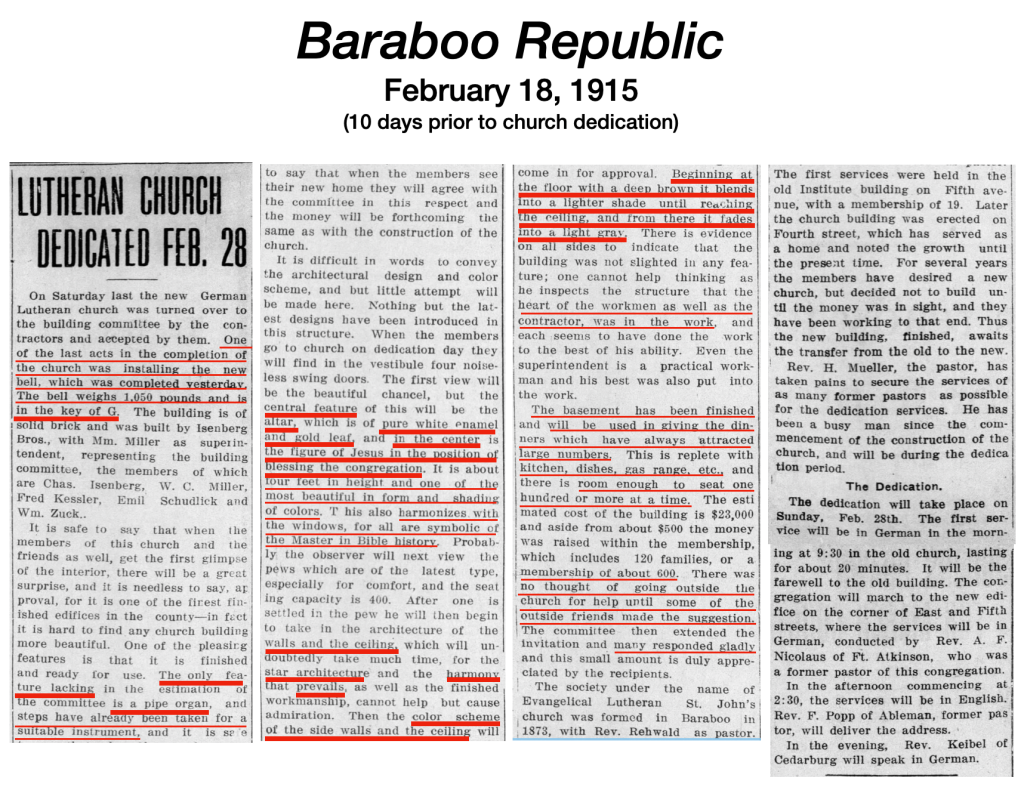
And here’s the second article…
Prompt Questions
26. From the photo and descriptions, what relevant details do you note about the interior architecture of the sanctuary? [HINT: Think about things like ceiling and window construction/design, colors, light fixtures, statuary, etc.] What might those details signal/communicate?
27. Why might a pipe organ be important in this church? Consider that it was deemed the only thing lacking when the church was completed in 1915, and that a very big deal was made of the brand new pipe organ during the congregation’s 1923 centennial celebration, including extensive description of its flexibility, stops, tones, etc.
28. Is the weight and/or key of the 1915 church’s bell potentially important? Why?
29. Is the date on which the church cornerstone was laid potentially important? What about the church’s dedication date?
30. Does the congregation’s founding date and the centennial celebration date match? If not, what reasons might exist, whether innocent or hidden?
31. Is there anything significant about the key texts invoked at the congregation’s centennial?
32. In the article about the church centennial and the dedication of the church organ, the phrase “high order” is used in relationship to the hymns sung. What’s interesting about that phrase, and why might you want to pay special attention to it?
33. Who is prominently mentioned as a founding member of this church? Why should that raise your eyebrow?
34. Who is noted as a prominent financial contributor to this church? Why should that raise your eyebrow even higher?
Church Graphics and Insignia
This church has its own insignia/logo, provided below.
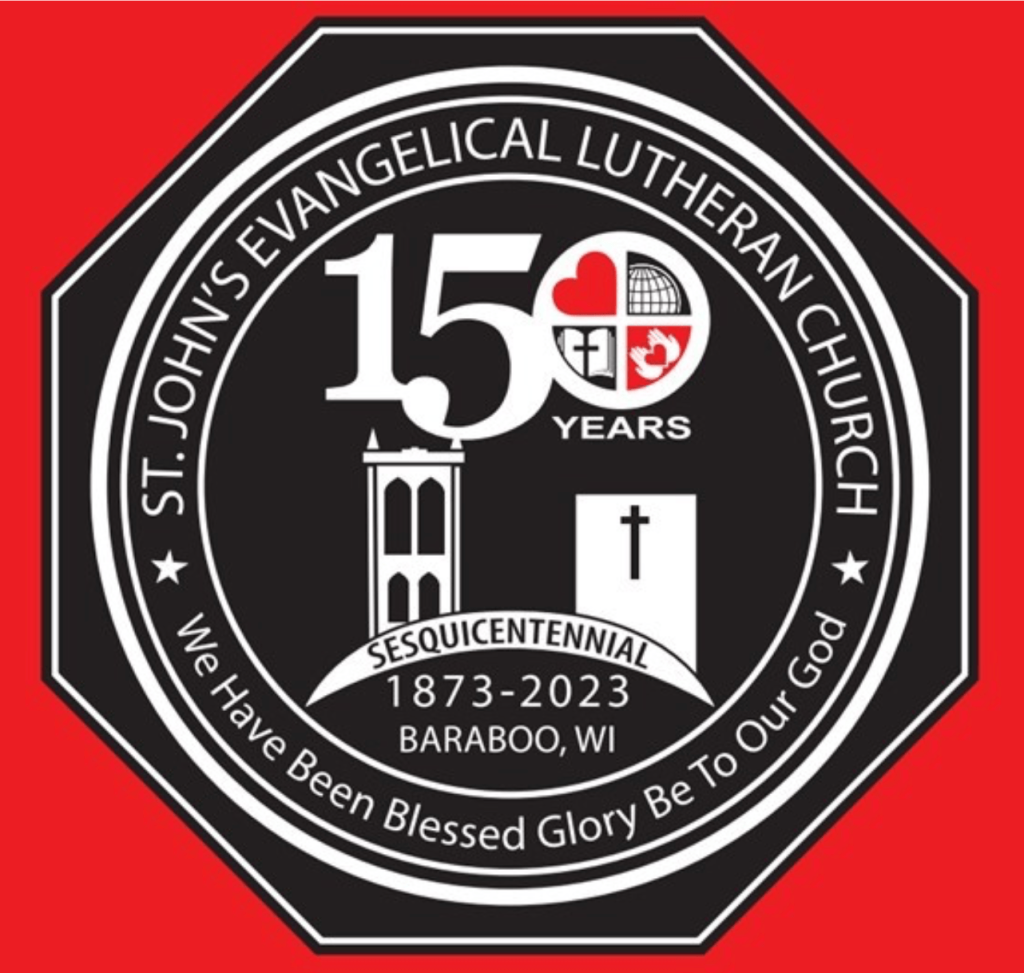
It also created a sesquicentennial medallion a couple of years ago, which incorporates the church insignia along with graphics of the bell towers of both the 1915 and 1975 church buildings.
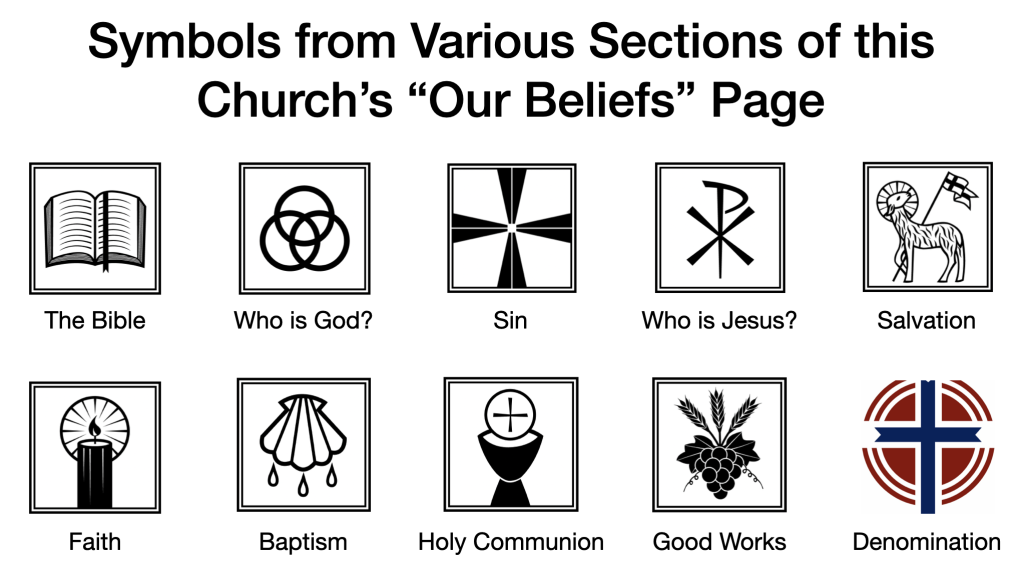
Finally, on the “Our Beliefs” page of its website, the church incorporates a set of 10 symbols worth considering.
Prompt Questions
35. Does the church logo/insignia potentially encode any symbolic content that aligns to the occult/Luciferianism? If you think the answer is yes, what symbols, colors, patterns, etc, would you use to justify your conclusions?
36. Does the sesquicentennial medallion potentially signal anything of importance? If you think the answer is yes, to what evidence would you point, and why?
37. Do the graphics/symbols on the “Our Beliefs” page potentially contain any occult meanings or indicators? If so, can you point to any evidence and/or articulate a well-reasoned argument for your conclusions? (If you have a subscription, Veronica’s archive of premium blog posts and transcripts would come in really handy for this part of your dig!)
38. Do any of the graphics tied to this church or its denomination suggest the involvement of particular Luciferian orders? If so, which ones, why, and what verification can you find?
Jewelry and Decorative Hangings
Just one more item before I conclude this decode post. In looking through photos online and church service videos, I spotted a pectoral pendant worn regularly by one of the church’s pastors. I’ve provided a cropped image, below, that shows the pendant clearly. The pastor in question holds the title of “Campus Pastor” and “Interim Principle.” In other words, he’s the pastor over the church’s parochial school, a couple of blocks away. However, he regularly ministers at the church, as well. Having done some initial investigation, I can tell you that the “cross” this pastor wears is not standard within any branch of this general denomination.
[NOTE: The school this pastor currently oversees has been operational since 1926. The congregation initially constructed a four-classroom school on the lot immediately adjacent to the church, to the east. A 1927 Sanborn Fire Insurance map appears to indicate that the two buildings were likely connected through a basement passage. In 1959, the congregation built a larger school building a couple of blocks away, still in use today. The old school building was rented by Sauk County for a time for some offices that couldn’t be housed downtown. However, it was ultimately demolished in 1973, creating parking space for the planned new church building.]
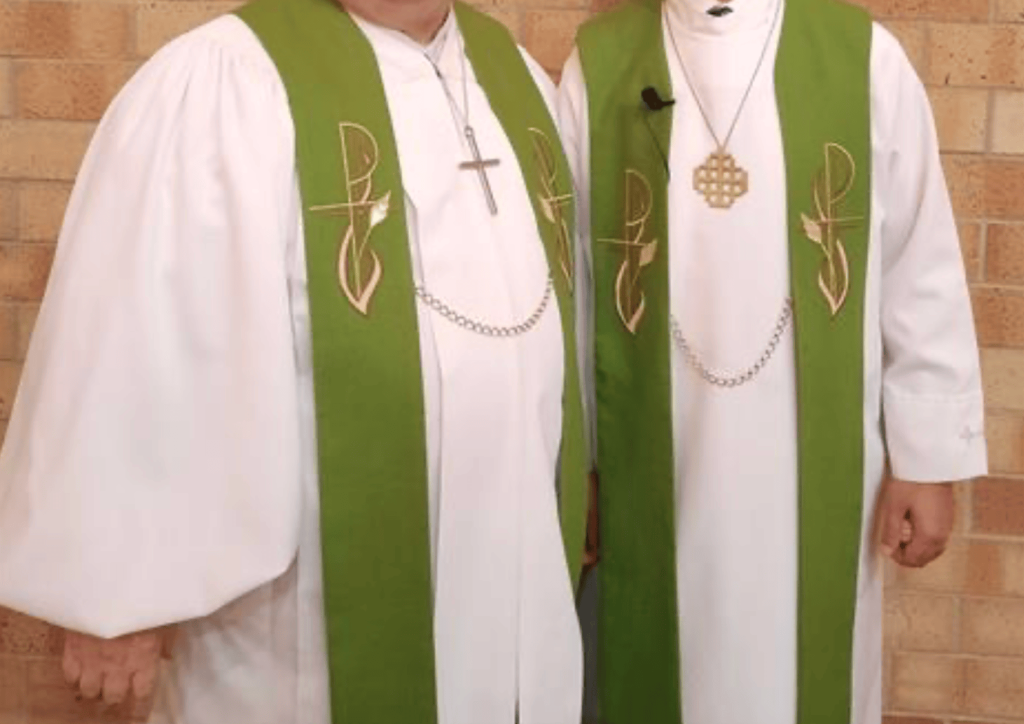
Prompt Question
39. What is the pectoral pendant worn by the pastor on the right of the first photo?
40. Is this type of pendant/cross associated with any specific Luciferian orders? Is so, which one/s?
41. What can we potentially deduce about this pastor from his regular use of this emblem?
As I’ve noted, there’s lots more to investigate and consider about this church, but hopefully this decode exercise has given you lots of new and interesting things to chew on.
Remember: Now that you’ve skimmed through, don’t let yourself get overwhelmed by the prompts. Start by pick a question or two that strike your fancy and just hone in on exploring/answering those. If you want to do more after that, do more.
** DON’T FORGET to let me know what kinds of things you observed or figured out (in the comments below or on X)! As noted, I’d love to give you credit for any interesting conclusions or even good guesses you make via the next podcast discussion that Veronica, Rachel, and I record together.. **